
Why Does My Drain Keep Clogging After Cleaning?
Your sink finally empties, the shower stops pooling, and everything seems normal. Then the water starts draining slowly again. If you have already cleared the blockage, why does the same problem keep returning?
A drain can clog again because buildup remains inside the pipe, new debris collects in the same place, or a pipe defect keeps restricting wastewater flow. The right solution depends on which fixtures are affected and what the previous cleaning actually removed.
Before paying for another clearing, notice where the problem starts, how quickly it returns, and whether using one fixture affects another. Those details help narrow down what needs checking.
Why Does My Drain Keep Clogging After Being Cleared?
Water flowing again does not always mean the blockage is completely gone. A drain may handle small amounts of water but back up when more water passes through.
For example, your kitchen sink may drain normally when the tap is running but back up when the dishwasher empties. This can mean a partial blockage is restricting the flow.
Clogs can return when waste catches on tree roots, rough spots, or uneven pipes. Removing the waste helps water flow again, but it may leave the cause unchanged. How quickly the clog returns can help explain the problem, but the drain needs to be checked to find the cause.
Cleared and Cleaned Aren’t the Same Thing
Drain clearing removes or breaks through a blockage so water can flow again. Drain cleaning also removes buildup inside the pipe. Companies may use these terms differently, so ask exactly what the service includes.
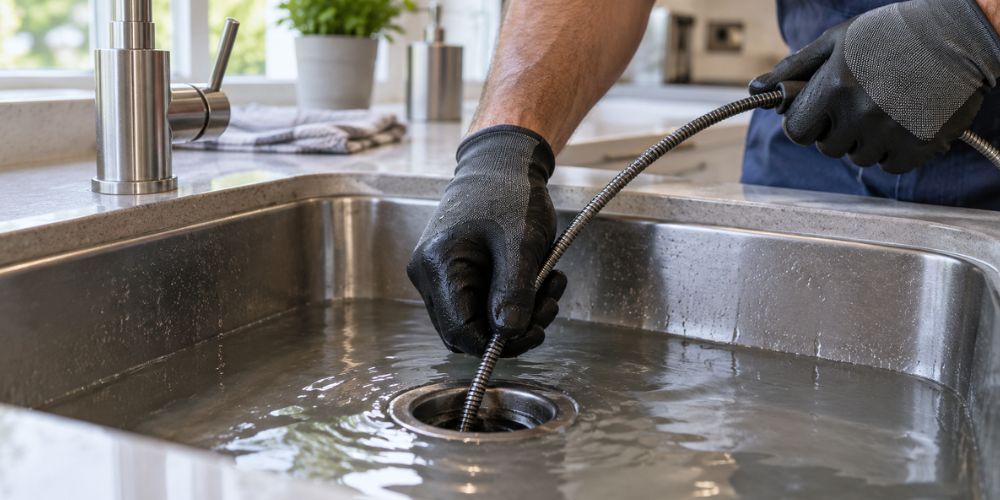
A drain cable can remove many blockages. Hydro jetting uses high-pressure water to clear buildup, but it is not suitable for every pipe. The technician should check the pipe’s condition, access, and type of blockage before choosing a method.
Before the work begins, ask:
- What will the service include?
- Which part of the drain will be cleaned?
- Will water flow be tested afterward?
- Does the pipe need a camera inspection?
- What should I do if the clog returns?
Pattern One: The Same Fixture, Every Time
If the same sink, shower, or bathtub keeps draining slowly while other drains work normally, the problem may be in that fixture or its drain pipe. Bathroom sinks can collect debris around the stopper or in the curved pipe underneath. Showers often clog with hair below the drain cover. Kitchen blockages may sit farther along the pipe, beyond the trap under the sink.
Notice how the water drains. Does it back up right away or after a few minutes? Does it drain away overnight? Did the last cleaning fully solve the problem, even briefly?
These details can help locate the blockage. Avoid forcing tools into the drain if you do not know where the blockage is or what condition the pipe is in.
Pattern Two: Different Fixtures, Over Months
A clogged kitchen sink in January and a slow shower in June do not necessarily mean there is a main sewer problem. Each drain may have a separate blockage.
Keep a simple record of which drain clogged, when it happened, and what was done to clear it. Note whether other drains had problems at the same time. These details help the technician decide whether the blockages are separate or connected to the same pipe.
Pattern Three: Everything, Periodically
If several sinks, toilets, or showers back up at the same time, the blockage may be in a shared drain or main sewer line. A professional inspection can help find the cause. Watch for:
- Water rising in the shower when you flush the toilet.
- Several drains emptying slowly at once.
- Wastewater coming up through a floor drain.
- Gurgling sounds along with slow drainage.
- Backups after using more water than usual.
These signs do not automatically mean the sewer pipe needs replacing. The system needs checking to determine the right solution. If wastewater is backing up, stop using the affected fixtures and call a drain-cleaning professional.
Common Causes: Grease, Hair, Roots and Pipe Problems
Grease, fats, and oils can build up inside kitchen drain pipes and cause blockages. Wipes and other items that should not go down drains can make the problem worse. Keep these materials out of sinks and toilets to help prevent clogs.
In bathroom drains, hair mixes with soap residue and other debris. Removing visible hair helps, but some buildup may remain deeper in the pipe.
Tree roots can enter sewer pipes through cracks or loose joints and block the flow. Removing the roots clears the blockage but does not fix the opening where they entered.
Damaged or uneven pipes can also trap waste and cause repeated clogs. Cleaning removes the waste but cannot straighten or repair the pipe. A camera inspection can help show whether the line needs more cleaning, monitoring, or repairs.
Recurring Drain Clogs in Allentown Homes
If you own a home in Allentown, start with its past drain problems. The home’s age or location alone cannot explain what is happening inside the pipes.
Share any previous repair bills, inspection videos, and notes about clogs with the technician. Explain which drains are affected, whether plumbing was changed during renovations, and whether backups happen after rain or heavy water use.
Ask the technician to explain the findings and why the recommended work is needed. A recurring clog does not always require major repairs.
Break the Cycle Instead of Repeating It
At your next appointment, explain how the drain was cleared before and how long it worked properly. Ask the technician to find out why the blockage returned.
Request a clear explanation of what needs cleaning, which method will be used, and how water flow will be tested afterward. If a camera inspection is suggested, ask what it will help identify.
Keep grease out of the sink, use drain screens to catch debris, and throw wipes in the trash. These habits can help prevent clogs, but they cannot fix damaged pipes.
If your drains keep clogging, contact Clearflow Drain Cleaning Allentown. Share the symptoms and previous work so the team can assess the problem and explain your options.
How
Stop Recurring Clogs by Finding the Cause
A drain that keeps clogging may have leftover buildup, a deeper blockage, or a pipe problem. Clearing it again may restore flow temporarily, but finding the cause helps determine the right solution.
Keep track of which drains are affected and how soon the problem returns. Share these details with a drain-cleaning professional so they can recommend suitable cleaning or further inspection.
For help with recurring clogs, contact Clearflow Drain Cleaning Allentown to discuss the problem and your options.
Get Help With Recurring Drain Clogs in Allentown
Tired of the same drain clogging again? Contact Clearway Drain Cleaning in Allentown to discuss your drain problem, arrange an assessment, and get clear advice on the next steps.
Call Now to Schedule Drain Cleaning
← Back to all articlesStill dealing with a slow drain?
Contact Clearflow to discuss your drainage problem and check appointment availability in Allentown.