What is Hydro Jet Drain Cleaning?
A drain that keeps clogging can turn an ordinary day into a plumbing headache. You clear the blockage, water starts flowing, and everything seems fine. A few weeks later, the same drain slows down again. When this happens, the problem may involve buildup along the pipe walls rather than a single obstruction.
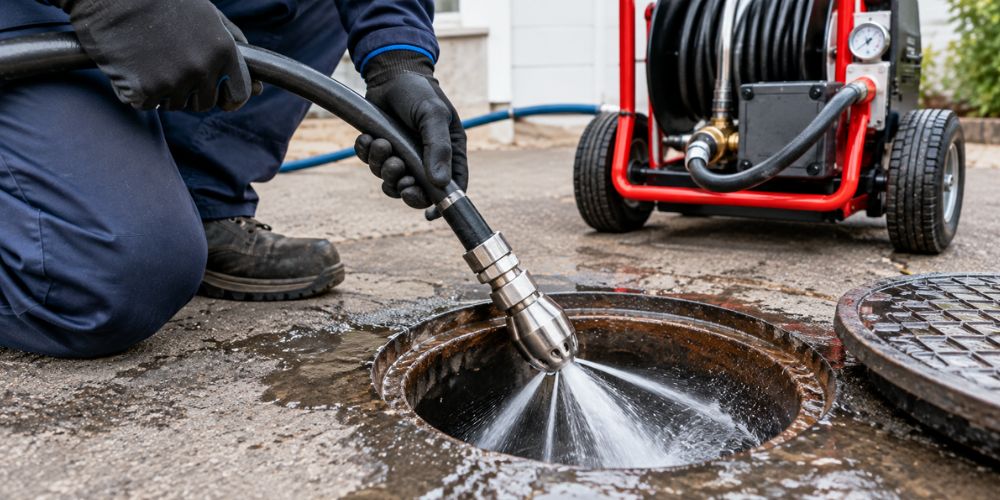
Hydro jet drain cleaning is a method that uses high-pressure water to break up blockages, clean deposits from pipe walls, and flush loosened debris through drains and sewer lines. A professional uses a specialized machine, flexible hose, and cleaning nozzle to direct water into the affected pipe. Water jetters commonly handle grease, sludge, sediment, sand, and other soft stoppages.
However, effective cleaning depends on more than a powerful machine. The obstruction, pipe condition, access, and equipment selection all matter. Understanding these factors helps you decide what to ask a plumber and what results to expect.
How Water Jet Sewer Cleaning Works
Water jet sewer cleaning uses a pump, a high-pressure hose, and a specialized nozzle to remove blockages and buildup inside pipes. The pump sends pressurized water through the hose, and the nozzle directs it toward the areas that need cleaning.
Backward-facing jets help move the hose through the pipe and flush loosened debris toward the access point. Depending on the nozzle, forward-facing jets target blockages, while angled jets clean deposits from the pipe walls.
The plumber chooses the hose, nozzle, and pressure settings based on the pipe’s size, condition, and blockage. A small kitchen drain may need a different setup from a main sewer line. Using the highest pressure does not necessarily produce the best result; the equipment must suit the job.
If your kitchen drain keeps clogging, ask whether the service will clean buildup along the affected section or only remove the immediate blockage. This helps you understand what the cleaning includes.
The Hydro Jet Cleaning Process
Hydro jet cleaning involves assessing the line, choosing an appropriate cleaning approach, and checking the result. The exact sequence depends on the condition and accessibility of the drain.
1. Assess the symptoms and plumbing history
The plumber needs to understand what has been happening. Explain which fixtures are affected, how often the problem returns, and what previous cleaning work has been performed.
Useful details include whether the blockage developed suddenly or gradually, whether several fixtures back up together, and whether another contractor previously identified roots or pipe damage.
2. Inspect the accessible pipe
A sewer camera inspection can help locate a blockage and identify visible conditions that influence the cleaning method. However, an obstructed line may limit what the camera can initially show.
Ask whether inspection is included in the service and whether another inspection will be necessary after clearing the obstruction.
3. Select the cleaning attachment
Different jobs may require different nozzles or several cleaning stages. The plumber may first work through the obstruction, then use another attachment to wash loosened material and address deposits along the pipe walls.
4. Clean the agreed section
The technician operates the equipment through a suitable access point and works through the section covered by the service. Before work begins, confirm where cleaning will start and end.
5. Evaluate the result
Ask how successful cleaning will be demonstrated. Restored flow provides useful information, while follow-up footage can help explain the condition of the accessible line. A clear service report should distinguish between material removed, remaining concerns, and any recommended additional work.
Hydro Jetting Without Chemical Drain Cleaners
Hydro jetting uses the force of water to clean suitable drains rather than relying on a chemical drain-cleaning treatment. This makes it an option for property owners who want to address buildup without adding chemical cleaners during the jetting operation.
If you have used a chemical drain cleaner, tell the plumber which product you used and when. These chemicals can cause serious burns and damage jetting hoses, so the technician needs this information before starting work.
Keep the packaging or take a photo of the label to help identify the product. Although hydro jetting does not add chemical cleaners, the wastewater still contains waste, loosened deposits, and any chemicals already in the drain. It must be handled carefully.
When Do You Need Hydro Jet Cleaning?
Hydro jet cleaning may help if buildup inside your pipes keeps causing drainage problems. A plumber should assess the cause before deciding whether it is the right cleaning method.
Recurring Blockages
If the same drain keeps clogging after previous clearing, explain the pattern to the plumber. Ask what the earlier service achieved and whether the underlying cause was identified. A recurring problem deserves a diagnosis before another cleaning appointment is treated as the solution.
Repeated Problems in a Heavily Used Kitchen Drain
Describe how the drain is used and whether previous inspections found deposits. In a commercial kitchen, also discuss grease-management practices and interceptor maintenance.
Several Fixtures Showing Problems
Tell the contractor if toilets, showers, or other fixtures are affected together. This information helps establish the scope of the problem and avoids focusing only on the most obvious symptom.
Previously Documented Roots or Buildup
If you have an earlier camera report, share it before scheduling work. It can help the provider understand what was found, where it was located, and whether additional assessment is needed.
For preventive maintenance, request a schedule based on the property’s use and service history. Ask what evidence supports the recommended interval and how that schedule will be reviewed.
The Pros of Hydro Jetting
- Removes Stubborn Clogs: High-pressure water breaks up grease, sludge, and sediment, then flushes loosened debris through the pipe to improve drainage.
- Works in Homes and Businesses: Hydro jetting can clean residential and commercial drain lines when the equipment and settings suit the pipe and blockage.
- Helps Clear Tree Roots: Specialized attachments can remove some roots inside sewer pipes, although difficult root blockages may need additional tools.
- Uses No Chemical Drain Cleaners: Hydro jetting relies on pressurized water to remove buildup, avoiding the need to add chemical drain cleaners during the service.
- Cleans Pipe Walls: Water jets remove deposits along the accessible pipe walls, providing broader cleaning than simply opening a passage through a clog.
The Cons of Hydro Jetting
- Cannot Clear Every Obstruction: Some severe blockages require mechanical tools or another method, so hydro jetting alone may not resolve every drainage problem.
- Risks to Weakened Pipes: High-pressure cleaning may damage fragile or deteriorated pipes, making a professional assessment important before work begins.
- Cannot Repair Pipe Damage: Hydro jetting removes buildup but cannot fix cracked, collapsed, or sagging pipes, which may need repair or replacement.
- Higher Upfront Costs: Specialized equipment and professional expertise can make hydro jetting more expensive than basic snaking or drain clearing.
- Potential Noise and Mess: Equipment noise and wastewater handling can cause temporary disruption, especially when access points are near occupied areas.
Conclusion
Hydro jet drain cleaning can remove stubborn clogs and buildup from suitable drain and sewer lines without chemical cleaners. However, it cannot repair damaged pipes, and weakened lines may be unsuitable for high-pressure cleaning.
If your drains keep clogging, arrange a professional assessment to identify the cause. A plumber can check the pipe condition and determine whether hydro jetting or another approach is the right solution.
← Back to all articlesStill dealing with a slow drain?
Contact Clearflow to discuss your drainage problem and check appointment availability in Allentown.