
How Often Should You Clean Your Drains?
Drain cleaning often becomes a priority only when water stops flowing properly. A kitchen sink starts filling during dishwashing, the shower holds water around your feet, or an unpleasant smell develops near a bathroom drain. Regular maintenance helps you notice these problems early. However, every drain does not need the same cleaning booking.
Check kitchen drains monthly, remove bathroom hair and residue regularly, and inspect outdoor drains seasonally. Professional cleaning should follow your plumbing’s condition, usage, and history of blockages. Several plumbing companies recommend annual professional service, with shorter intervals for heavily used homes.
This guide explains what to clean, when to clean it, and which warning signs mean you should call a professional.
Why Regular Drain Cleaning is Important
Drains carry wastewater away, but everyday waste can build up inside them. Kitchen sinks collect food scraps and grease, while bathroom drains gather hair and soap residue. Over time, this buildup can restrict water flow and cause slow drainage. Addressing the problem early helps restore flow before the fixture becomes difficult to use.
Regular maintenance makes it easier to spot changes in your drains, such as slower drainage or recurring odors. Thomas & Galbraith and Ace Hardware Home Services both recommend maintaining drains and addressing slow drainage before problems worsen.
However, cleaning is only one part of plumbing care. Repeated blockages may require inspection, and cleaning alone cannot resolve every underlying pipe problem.
How Often Should You Clean Drains in Your Home?
How often a drain needs maintenance depends on the fixture, how frequently it is used, and any past problems. The schedule below offers useful checkpoints, but chemical treatments or professional cleaning may not be needed at every interval.
| Drain type | General maintenance schedule | What to check |
| Kitchen drains | Monthly, with regular strainer cleaning | Food residue, odors, and slower drainage |
| Bathroom drains | Assess buildup every three to four months; remove visible hair sooner | Hair, soap residue, and stopper buildup |
| Main sewer line | Discuss annual service with a professional | Previous backups, inspection findings, and pipe condition |
| Outdoor drains | At least twice yearly and after storms | Leaves, dirt, and debris around accessible grates |
These intervals reflect Roto-Rooter’s published schedule. Treat them as starting points and adjust them to your home’s needs.
Kitchen Drains
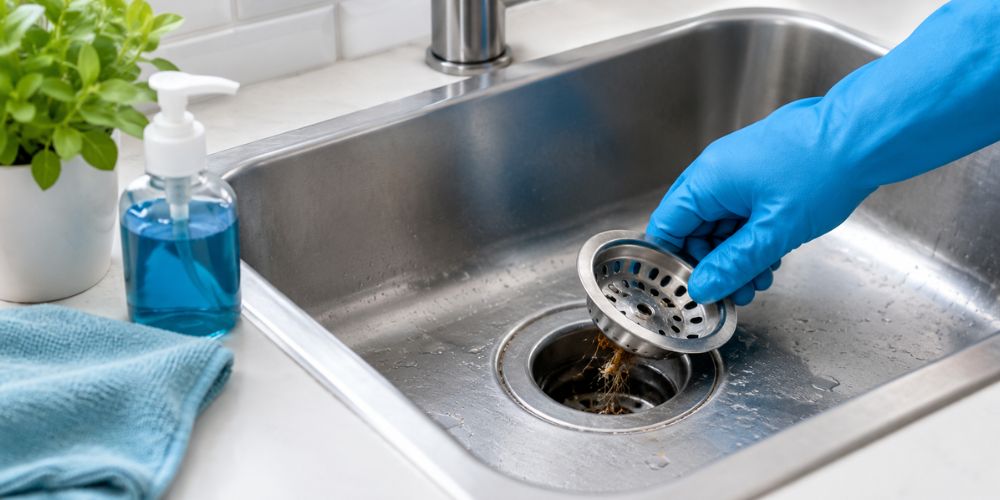
Check your kitchen drain monthly and clean the strainer whenever food scraps collect. If you cook and wash dishes often, scrape plates before rinsing and collect cooking grease for proper disposal. If the sink keeps draining slowly even when the strainer and drain opening are clear, have the drain inspected.
Bathroom Drains
Check bathroom sinks, showers, and tubs for hair and residue every three to four months. Empty hair catchers whenever debris collects, and clean removable stoppers according to the fixture’s instructions. If clearing visible debris does not improve drainage, have the drain inspected.
Main Sewer Lines
Several service providers recommend annual professional drain cleaning, but the right schedule depends on your home’s condition and history of drainage problems. Ask your plumber why they recommend a particular interval. Homes with recurring backups or known issues may need more frequent attention than homes without symptoms.
Outdoor Drains
Check accessible outdoor drain grates in spring and fall, and after storms. Clear leaves and debris from around the opening to keep water flowing. If water still pools after clearing the debris, have the drain inspected for a deeper blockage or another issue.
What Can Change Your Drain Cleaning Schedule?
Drain maintenance needs can change with household use. Shared showers collect more hair, and frequent cooking puts greater demand on kitchen sinks. Past clogs also matter, especially if they return soon after clearing.
Supreme Service Today suggests professional cleaning every six months for households with heavy use. Discuss this schedule with a plumber to see whether it suits your home, rather than basing the decision on household size alone.
Known pipe defects should also shape your maintenance plan. Ask whether cleaning addresses the problem or only provides temporary relief until repairs are made.
How to Keep Drains Clean Between Professional Visits
Professional cleaning does not replace everyday prevention. Simple habits help keep unsuitable materials out of your plumbing.
Keep Grease and Oil Out of Kitchen Drains
Collect cooking grease in a suitable container for proper disposal, and scrape food scraps from plates before washing. Even with a garbage disposal, grease and some food waste should stay out of your drains.
Use Strainers and Hair Catchers
Use strainers in kitchen sinks and hair catchers in showers or tubs, and empty them regularly. A clogged strainer or hair catcher can slow drainage even when the pipe below is clear.
Follow Garbage Disposal Instructions
Follow the manufacturer’s instructions for your garbage disposal, including guidance on water use. Cold water does not make fats or grease safe for drainpipes, so keep them out of the sink.
Flush Only Appropriate Waste
Do not flush wipes, sanitary products, paper towels, or other unsuitable items down the toilet. Keep a bin in the bathroom so household members and visitors can dispose of them properly.
Be Selective About Cleaning Products
Before using an enzymatic drain cleaner in Allentown, read the instructions and check that it is suitable for your plumbing or septic system. It may not clear an existing blockage. Hot water, baking soda, and vinegar are not guaranteed fixes either. If a treatment only provides temporary relief and the problem keeps returning, have the cause investigated.
Benefits of Preventive Drain Maintenance
- Preventive maintenance helps you manage drains before they become a repeated inconvenience.
- Use strainers, hair catchers, and proper disposal habits to keep debris out of drainpipes.
- Check drains regularly to spot slow flow or recurring blockages before they disrupt everyday use.
- Keep drain openings clear to help sinks, showers, and tubs drain properly.
- Keep a simple maintenance record for your plumber, noting the fixture, date, symptoms, and any treatments used.
Signs Your Drains Need Cleaning
Do not wait for your next maintenance checkpoint if drainage changes noticeably.
Watch for:
- Slow drainage: Water takes longer than usual to leave a sink, shower, or tub.
- Recurring clogs: The same fixture blocks repeatedly.
- Persistent odors: An unpleasant smell remains after accessible surfaces are cleaned.
- Gurgling with drainage problems: Sounds occur alongside poor flow or backups.
- Several affected fixtures: More than one drain becomes slow or blocked.
- Cross-fixture backups: Using one fixture causes water to appear in another.
- Sewage emerging from a drain: Wastewater backs up into the home.
The plumbing articles recommend professional attention for these symptoms. Thomas & Galbraith describes sewage coming up through drains as an emergency. Symptoms alone do not reveal the cause, so clearly describe what you notice to help the plumber assess the problem.
Effective Methods to Clean Your Drains
The appropriate method depends on where the obstruction is and what is causing it.
Cleaning Accessible Strainers and Stoppers
Start by clearing visible debris. Empty strainers, remove hair, and clean removable stoppers according to the fixture’s instructions. Then check the drainage. If water still drains slowly, the problem may be deeper in the pipe and require further inspection.
Using a Suitable Plunger
The right plunger may help clear a localized blockage. Thomas & Galbraith recommends flat cup plungers for suitable sink or shower drains and flange plungers for toilets. Follow the tool’s instructions. If you have already used a chemical drain cleaner, avoid plunging or anything that could splash it, and let your plumber know.
Mechanical Drain Cleaning
A plumber may use an auger or drain-cleaning machine to clear a blockage, choosing equipment suited to the fixture and pipe. If the blockage persists, have the cause assessed instead of repeatedly trying unsuitable tools.
Hydro Jetting
Hydro jetting may help remove certain types of buildup inside pipes. Ask your plumber whether it suits your drain and whether the pipe’s condition has been checked. It is not the right solution for every slow drain.
Video Camera Inspection
A camera inspection helps identify a drain problem but does not clean the pipe. Supreme Service Today lists camera inspections and hydro jetting among its professional tools. Ask your plumber which services suit your blockage and why.
When Should You Call a Professional?
Have a drain inspected if it stays slow, keeps clogging, or causes problems in other fixtures. Seek prompt help if several fixtures back up or sewage appears. Avoid contact with wastewater and explain which areas are affected when requesting service.
Before the plumber leaves, ask what caused the problem, whether it has been resolved, and whether further inspection or repairs are needed. Any maintenance plan should clearly explain the next steps and why a particular cleaning schedule is recommended.
Keep Your Home’s Drains on a Practical Maintenance Schedule
Clean strainers and hair catchers regularly, check drainage each month, and inspect outdoor drain openings seasonally. Base professional cleaning schedules on your plumbing’s condition and past problems.
If drains stay slow, clogs return, or water backs up, arrange an inspection before the problem causes further disruption.
For Allentown homeowners, a professional assessment can help determine whether drain cleaning, a camera inspection, or repairs are needed. Schedule service for persistent problems and ask for a maintenance plan tailored to your home.
Conclusion
The right drain cleaning schedule depends on how often you use your drains and whether you’ve had problems before. Clean strainers and hair catchers regularly, check for slow drainage each month, and clear outdoor drain openings seasonally.
If clogs keep returning or water backs up, arrange a professional inspection. For homeowners in Allentown, PA, a drain assessment can help identify the cause and establish a maintenance plan suited to your home.
← Back to all articlesStill dealing with a slow drain?
Contact Clearflow to discuss your drainage problem and check appointment availability in Allentown.