
What Dissolves Hair in a Drain?
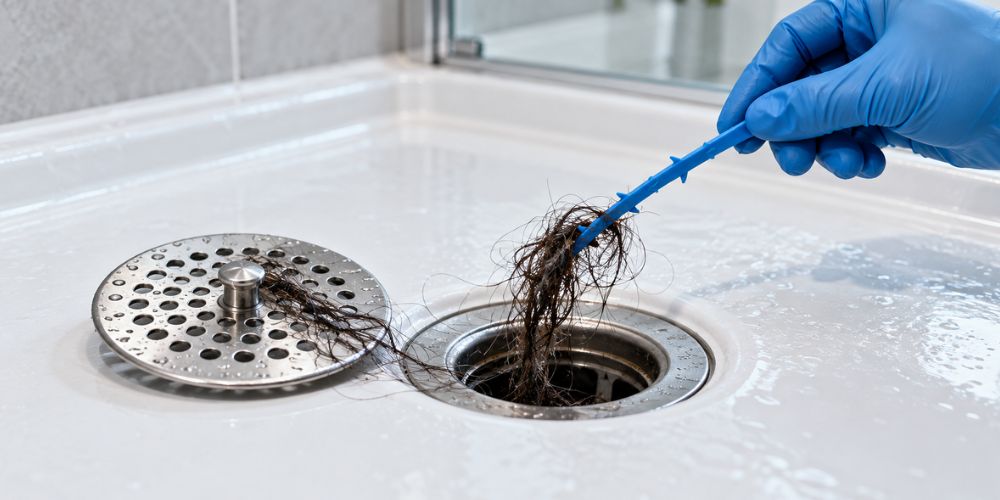
A slow shower drain often starts with a few strands of hair caught around the drain opening. More hair collects, soap residue builds up, and water begins pooling around your feet. Before long, you are looking for something that will clear the blockage quickly.
Some drain cleaners formulated for hair clogs can break down hair, but not every drain-cleaning product works the same way. For accessible hair near the drain opening, physical removal may be the simplest first step. Manufacturer guidance also distinguishes fast-acting clog removers from slower products intended for buildup maintenance.
The right approach depends on where the blockage is, what it contains, and whether you have already used a chemical cleaner.
Does Drain Cleaner Dissolve Hair?
Certain chemical drain cleaners are designed to dissolve or break down hair and the residue surrounding it. However, “drain cleaner” is a broad category. A maintenance treatment, a grease remover, and a hair-clog remover may have different purposes.
Which Drain Cleaners are Designed for Hair Clogs?
Look for a product that specifically lists hair among the materials it treats. Also check that it is intended for the affected fixture, such as a bathroom sink, shower, or bathtub.
Why Results Depend on the Product and Blockage
A product can be designed for hair without resolving every drainage problem. The blockage may include other material, extend beyond the treatment area, or involve a problem that requires investigation.
Before choosing a bottle, consider what you actually know. Have you seen hair beneath the stopper, or are you assuming hair is responsible because the shower drains slowly?
Dissolving Hair vs. Removing the Entire Clog
Breaking down some material and restoring normal drainage are different outcomes. After treatment, check whether water drains properly and whether the problem returns.
If drainage improves only briefly, record what happened. That information helps a plumber assess the recurring problem.
Why Does Hair Clog Drains?
Hair can get caught around drain covers and stoppers, mixing with soap residue to form a clog. Hair near the opening is often easy to remove, while deeper blockages may need a drain snake or professional cleaning.
How Hair Collects Around Stoppers and Drain Openings
Loose hair can get caught around the drain stopper or grate. Over time, the strands build up into a tangled clump that blocks water flow. Check the drain opening and any removable stopper for trapped hair before choosing a cleaning method.
How Soap Residue and Other Debris Add to the Blockage
Hair can mix with soap residue and other debris to form a stubborn drain clog. The tangled strands hold the buildup together, making it harder for water to wash it away.
Why Hair Clogs Can Return After Cleaning
If your drain keeps clogging, the previous cleaning may have removed only some hair or improved water flow temporarily. The blockage could also have a different cause. Note which drain is affected, what treatments you tried, and how long they worked to help a plumber identify the problem.
What Can Dissolve Hair in a Drain?
The most useful distinction is between a product labeled for hair-clog removal and one intended primarily for maintenance.
Chemical Drain Cleaners Labeled for Hair Clogs
Choose a drain cleaner suited to your clog type and fixture. Do not rely on labels such as “powerful” or “professional strength.” Before buying, check where it can be used, how to apply it, and what precautions to follow.
Enzyme and Biological Drain Cleaners: Check Their Intended Use
Enzyme and biological drain cleaners have different uses. Some are designed mainly for regular maintenance and removing organic buildup.
For example, Green Gobbler’s Enzyme Drain & Grease Trap Cleaner targets grease, fats, oils, and sludge. This does not necessarily mean it will quickly dissolve a thick hair clog. Check whether the product specifically lists hair removal before choosing it..
Why No Single Product Works for Every Blockage
Use the following comparison to guide your decision:
| Option | Intended role | What to check |
| Hair-clog remover | Treating the materials listed on its label | Fixture compatibility and application restrictions |
| Enzyme or biological treatment | Product-specific buildup control or maintenance | Whether hair removal is explicitly claimed |
| Hair-removal tool | Pulling out accessible hair | Tool instructions and suitable drain access |
| Professional drain cleaning | Assessing and treating persistent problems | Diagnosis, service scope, and findings |
A clear product claim is more useful than a general promise to clean drains.
How to Remove Hair from a Drain Without Chemical Cleaners
These steps are for drains where chemical cleaner has not already been added. If a chemical treatment is present, follow its restrictions and seek advice before using tools.
Remove Accessible Hair Around the Drain Opening
Check the drain cover and opening for visible hair. Carefully remove any strands you can reach and throw them in the trash. This helps you spot and clear a blockage near the surface.
Clean a Removable Drain Stopper
Check how to remove your drain stopper. Some lift straight out, while others attach to parts beneath the sink. Follow the fixture’s instructions, and do not force the stopper or take apart fittings you are unsure how to put back.
Use a Plastic Hair-Removal Tool
A plastic drain tool with small hooks can pull out hair near the drain opening. Follow the tool’s instructions, then throw the collected hair in the trash. You may need to remove the drain cover or stopper to reach the blockage.
Use a Suitable Drain Snake for Deeper Blockages
For a blockage beyond a short tool’s reach, use a drain snake designed for your sink, shower, or tub. Follow its instructions, and do not force it if it gets stuck or meets strong resistance.
When to Stop and Get Professional Help
Stop and call a plumber if you cannot safely reach the blockage, the tool gets stuck, or the drain still runs slowly after cleaning. Explain what you tried and what happened so the plumber can assess the problem.
How Do Plumbers Remove Stubborn Hair Clogs?
Inspecting the Drain and Locating the Blockage
A professional assessment should establish where the problem is and which method suits it. Ask whether the obstruction is accessible near the fixture or requires further investigation.
Using Professional Drain-Cleaning Tools
Plumbers may use drain-cleaning equipment to reach obstructions beyond ordinary household tools. The supplied plumbing articles describe professional snakes and other cleaning equipment as options for persistent problems.
Assessing Whether Further Inspection or Cleaning Is Needed
Further work should follow the findings. Request an explanation before approving additional cleaning or repairs.
You should understand what was removed, whether drainage improved, and whether any concern remains.
Conclusion
Some drain cleaners can dissolve hair, but the product must suit the clog and fixture. Removing accessible hair is a practical first step when no chemical treatment is present.
Follow product instructions, never mix cleaners, and avoid repeated attempts without understanding the problem. If the drain remains blocked or keeps clogging, arrange a professional assessment to identify the cause and choose an appropriate solution.
← Back to all articlesStill dealing with a slow drain?
Contact Clearflow to discuss your drainage problem and check appointment availability in Allentown.